RCForb Client
- 4.2
- Rating
- 10.00K
- Installs
- $9.99
- Price
 Analysis by App-foxy
I approached RCForb Client as a communication tool for a very particular starting condition: I wanted to interact with a remote amateur-radio station from an Android device instead of sitting directly beside the radio equipment. That immediately separates it from ordinary messaging apps. It is not designed for casual chats, group conversations, or quick file exchanges. Its purpose is to act as a mobile doorway into the RemoteHams.com radio environment, so its value depends heavily on whether remote radio operation is already part of your routine.
The app comes from RemoteHams.com and is listed as an Android RCForb client in pre-release form. That wording matters because this feels more like a focused technical utility than a polished, general-purpose communication product. I found the appeal in its directness: it tries to put remote station access in a portable format, without surrounding the main task with social features I would never use. At the same time, that narrow design means a new user should not expect the guided, forgiving experience associated with mainstream communication apps.
Following a remote-radio session from phone to outcome
When I judge a remote-radio session from phone to outcome, I pay attention to more than whether the client opens: I want to know whether each handoff leaves me with a clear next step. A useful habit is to decide in advance what a successful short session should accomplish, then stop once that task is done. That keeps mobile access purposeful and makes it easier to tell when a longer, more comfortable setup would be the better choice.
You May Also Like

 Blood Strike: 2.5 Anniversary
Blood Strike’s Loadouts Turn Every Drop Into a Tactical Gamble
A close look at Blood Strike’s custom loadouts: how fast access to signature weapons reshapes its battle royale rhythm, rewards preparation, and narrows the gap between fights.

 Pandora - Music & Podcasts
Pandora’s Music Is Easy to Start, but Harder to Recover
Pandora’s strength is its low-effort path from a seed to a station. Its weak spot is how much confidence it asks you to place in connection, setup, and quiet recovery.

 8 Ball Pool
 Is Built on Rivalries, Rematches, and Routine
A close look at the rivalries, rematches, shared routines, and unanswered safety questions that turn a quick pool match into a persistent mobile community.

 Samsung Music
’s Quiet Strength Is Playing What You Already Own
Its reach comes less from spectacle than from dependable access to a personal library. That simplicity is both the app’s strongest retention engine and its ceiling.

 AccuWeather: Weather Radar
AccuWeather Review: A Quick, Clear Forecast for Everyday Decisions
For everyday plans, the best forecast is the one you can understand quickly. AccuWeather makes rain timing, radar, and local conditions easy to act on, with a few trade-offs.

 Hill Climb Racing
Why Hill Climb Racing Still Turns Crashes Into One More Run
A tiny car, a bumpy hill and one more upgrade: Hill Climb Racing keeps resurfacing because its simple chaos makes every near-miss feel personal.
More From Our News Desk
View All News


The starting condition: deciding whether mobile access is useful
Before installing it, I would ask a simple question: what am I trying to accomplish? If I need to send a normal message to another person, this is the wrong category entirely. If I want to reach a compatible remote amateur-radio setup while away from the computer, the idea becomes much more compelling. The app is best understood as a specialized control and communication client, not as a replacement for SMS, voice calling, or a conventional internet chat service.
That distinction also affects expectations around setup. A person already familiar with remote radio concepts will probably understand why a client like this exists. Someone arriving from a typical chat app may wonder why the interface feels so task-oriented and why the useful outcome depends on equipment and service arrangements beyond the phone itself. The phone is only one part of the chain.
In practical terms, the chain starts with an Android device, continues through the RCForb service environment, and ends at a remote station or radio session. The handoff between those parts is where most of the real-world experience is decided. The application can be convenient, but it cannot make an unavailable station available or turn an unsuitable connection into a reliable one.
Installing and preparing the client
RCForb Client is aimed at a broad age range, with an Everyone content rating, but that should not be confused with being beginner-oriented. The subject matter is technical even when the age label is open. The application was released on May 14, 2015, and its current version is 0.0087, while support begins with Android 4.4. Those details suggest a product with a long-running, specialized role rather than a newly designed mobile communication platform.
The listed price is $9.99, which changes the decision compared with a free messaging app. I would only pay that amount after confirming that the remote-radio workflow matches my needs. For an active RCForb user, the cost may be easier to justify because the app serves a specific purpose. For someone merely curious about remote radio, it is sensible to learn how the wider service works first and make sure there is a compatible station or account path before treating the client as an impulse purchase.
My first useful preparation tip is to sort out the station side before blaming the phone. If the remote station is unavailable, busy, restricted, or configured differently from what I expect, repeatedly reinstalling the app will not solve the actual problem. I would also keep the first session short and deliberate: confirm that I can reach the intended environment, identify the controls I need, and only then attempt a longer operating session.
Moving through the session step by step
Once the client is ready, the workflow is less like opening a chat and more like entering a remote workspace. I begin by identifying the station or remote-radio destination I intend to use. The important mental shift is that I am not simply choosing a person from a contact list. I am selecting access to a technical endpoint, and the endpoint determines what can happen next.
After that, I treat the connection as a handoff. My phone sends the request into the remote service, the service passes it toward the station, and the station becomes the place where the radio activity occurs. This is why patience and careful observation matter. A delay or failed transition may come from several points in the chain, not necessarily from the visible client screen.
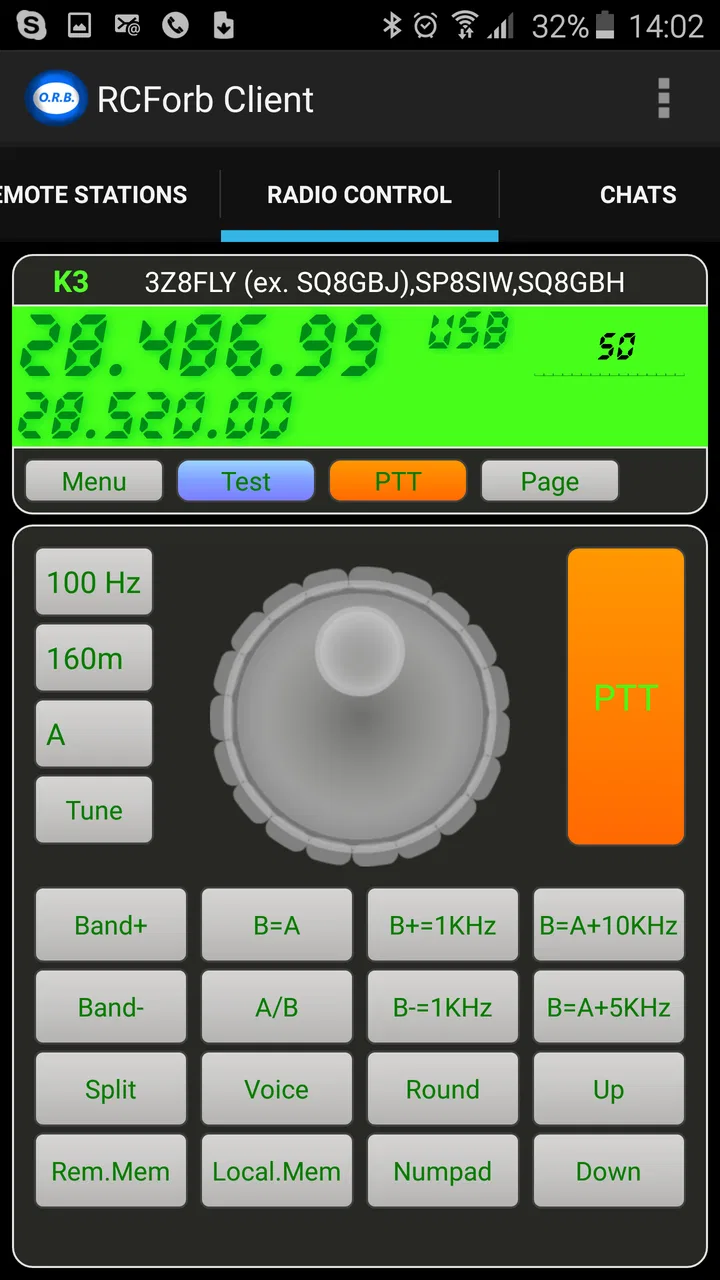
When the session is active, I focus on one action at a time. On a small phone display, it is tempting to tap quickly, especially if I am trying to adjust something while listening or communicating. A better approach is to pause after each meaningful change and verify the resulting state. That habit reduces accidental inputs and is particularly valuable when the remote station is shared or when an incorrect action could interrupt someone else’s use.
A second non-obvious tip is to use the mobile client for defined tasks rather than treating it as a full substitute for a desktop operating position. A phone is convenient for checking access, making a brief adjustment, or participating while away from a desk. It is less comfortable when I need prolonged concentration, repeated control changes, or a broad view of many pieces of information at once. The smaller form factor is the advantage and the limitation at the same time.
Understanding the handoffs between people and equipment
The most important handoff is not just between the app and the station. It is also between the person using the station and anyone else who may depend on it. A remote radio resource can involve shared access, so I would avoid assuming that a successful connection means I can use it indefinitely. Good remote operating etiquette still matters, even when the interface is on a private phone.
This is where RCForb Client differs from familiar communication alternatives. In a messaging app, the recipient is usually another user, and the service handles most of the technical complexity invisibly. Here, the remote station is part of the conversation. The quality of the result depends on the station’s configuration, the service connection, the mobile network or Wi-Fi path, and the user’s ability to interpret the controls correctly.
That layered arrangement creates a useful workflow for a person who already knows the radio side. I can move from “I need access while away from my computer” to “I am connected to the relevant remote environment” without carrying a laptop. The handoff is valuable precisely because the client keeps the mobile portion focused. It does not try to turn the experience into a social feed or bury the technical purpose under unrelated features.
It also creates a responsibility that ordinary apps rarely impose: I need to know which part of the chain is failing. If the app opens but a station cannot be reached, the issue may be station availability or service access. If the connection works but interaction feels delayed, the network path may be involved. If I can connect but cannot obtain the intended result, the station configuration or my operating choices may be the cause. Thinking in these separate stages saves time.
A realistic everyday scenario
Imagine I am away from my home radio setup and receive a message that I need to check a remote station before deciding whether to continue an operating session later. With a conventional desktop-only workflow, I might wait until I return or carry a computer. With RCForb Client, I can use the phone as the first step: open the client, reach the relevant remote environment, inspect whether access is practical, and decide whether a short session is enough.
The outcome in that scenario is not necessarily a long conversation. The useful result may simply be confirming that the station is reachable and completing a brief remote-radio task. That is an important strength because the app makes mobile access possible in situations where a full workstation would be inconvenient. It is especially suited to users who already understand what they want to check and do not need a tutorial at every stage.
There is a trade-off, though. If the task expands unexpectedly, the phone may stop being the comfortable choice. A longer session can make small controls, limited screen space, and dependence on the connection more noticeable. I would use the mobile client as a practical extension of my setup, not automatically as my only operating method.
What the public response suggests about fit
The app holds a 4.2 average from over 380 ratings, alongside more than 80 written reviews. I read that as a sign of a useful but specialized product: enough people find it worthwhile to rate positively, while the experience is clearly not universal. A focused technical client can satisfy its intended audience without feeling effortless to everyone who downloads it.
It has also passed 10,000 installs, which gives the project a meaningful user base without making it feel like a mainstream communication platform. That scale fits my impression of the app. It appears aimed at people who already have a reason to use the RCForb ecosystem, rather than at the general Android audience looking for a new way to chat.
The developer identity is easy to understand here because RemoteHams.com is directly associated with the service the client is meant to access. That alignment is reassuring for users who want a purpose-built companion instead of an unrelated third-party tool. Still, the specialized nature means I would evaluate it by whether it completes my remote-radio workflow, not by comparing its polish with the largest messaging brands.
Where the workflow breaks down
The first breaking point is the price-to-purpose equation. At $9.99, this is not a casual download for someone who only wants to experiment. The purchase makes more sense when I already know that RCForb access is relevant to me and that mobile use would genuinely save time. If my communication needs are ordinary calls, texts, or group chats, a free mainstream alternative is plainly better.
The second issue is the pre-release character suggested by the store summary. I would approach the app with realistic expectations about refinement. A technical client can be useful even when its presentation is not as smooth as a modern consumer app, but users who expect extensive onboarding, frequent visual polish, or a completely frictionless first session may be disappointed.
The third weakness is the dependence on a complete external workflow. The client cannot replace a compatible remote station, and it cannot remove every variable between the handset and the radio equipment. That makes troubleshooting less obvious than in a self-contained app. When something goes wrong, I have to check the app, the service path, the station, and my own operating assumptions instead of looking for one universal setting.
The Android requirement is generous enough for older devices, beginning with Android 4.4, but compatibility alone does not guarantee comfort. A device may run the client while still offering a cramped or awkward operating experience. I would judge the phone by screen readability, touch accuracy, and connection stability rather than by the operating-system requirement alone.
Who should use it and who should skip it
I would recommend RCForb Client to an amateur-radio user who already understands remote station access and wants a mobile route into that workflow. It is a sensible choice for checking or using a compatible station while away from a computer, especially when carrying a laptop would be excessive. Its strongest benefit is not breadth; it is the ability to connect a very specific need with a portable device.
I would be more cautious for a newcomer who has never used remote radio. The app may still be part of a learning path, but it should not be mistaken for a complete introduction to the subject. A beginner may benefit more from first understanding the service, station access, and operating process, then returning to the client once the desired outcome is clear.
I would skip it entirely if my goal is everyday communication. Signal, WhatsApp, Telegram, email, and ordinary phone tools are designed around people, messages, and conversations. RCForb Client is designed around a remote-radio connection. Choosing it for general chatting would be like choosing a specialist instrument when a basic tool would be faster and easier.
My final assessment after following the whole route
RCForb Client succeeds when I judge it by the complete journey: starting with a need for remote radio access, handing the request through the service and station, completing a focused mobile task, and accepting that the phone is only one part of the system. Its value is practical rather than flashy. It gives the right user a way to stay connected to a specialized setup without being tied to a desktop.
The key trade-off is simple: portability comes at the cost of comfort, simplicity, and independence from the remote station. I would pay for it only after confirming that the RCForb workflow is already relevant to me. For that audience, the focused design can be genuinely useful. For everyone else, the price, technical learning curve, and external dependencies outweigh the benefit.
My recommendation is therefore qualified but positive. If you are already part of the RemoteHams.com remote-radio environment and need Android access, this client is worth considering as a practical companion. If you want a polished all-purpose communication app, choose something else. RCForb Client is at its best when it stays in its lane—and that lane is remote amateur-radio communication from a mobile device.
FAQs for RCForb Client
01What is RCForb Client and what can I use it for?
RCForb Client is a mobile application that lets you connect to remote-controlled amateur radio stations through the Internet. After choosing an available station, you can tune frequencies, listen to live radio audio, and use the controls provided by the station owner. It is mainly intended for licensed radio enthusiasts, shortwave listeners, and anyone interested in exploring remote amateur radio receivers.
02Do I need an amateur radio license to use RCForb Client?
A license is generally not required simply to browse available stations or listen to received audio, although you should always follow the rules of the station and the laws in your country. Transmitting is a different matter: if a remote station allows transmit functions, you normally need the appropriate amateur radio license and operating privileges. Before transmitting, check the station’s requirements, access policy, and local regulations.
03Does RCForb Client work on both Android and iOS devices?
RCForb Client is designed for mobile use, but availability and supported features can vary depending on your operating system, device model, and the version published in the official app store. Some controls may also differ between platforms or between individual remote stations. Before downloading, check the current store listing, required operating-system version, permissions, and recent user reviews for compatibility information.
04Do I need a fast or unlimited Internet connection to use the app?
The application requires a stable Internet connection because it communicates with remote radio servers and may stream live audio. Basic tuning and control functions usually use relatively little data, while extended listening can consume more, especially on mobile networks. Wi-Fi is recommended for longer sessions. Connection quality also depends on the remote station, server availability, latency, and the number of users connected.
05Is every remote radio station available all the time?
No. Remote stations are operated by independent owners or organizations, so availability, schedules, controls, and access restrictions can vary considerably. A station may be offline for maintenance, limited to registered users, temporarily full, or configured only for receiving. Some stations provide transmit access under strict conditions, while others are listen-only. If a connection fails, trying another station later is often the best solution.
Pros
- Remotely controls supported radios from a phone or tablet.
- Provides access to radio controls while away from the station.
- Useful for monitoring and operating compatible remote radio setups.
- Touch-friendly interface makes basic adjustments convenient.
- Can reduce the need for a dedicated computer at the remote location.
Cons
- Requires a compatible RCForb server and properly configured radio station.
- Performance depends heavily on connection quality and network latency.
- Setup may be challenging for users unfamiliar with remote radio networking.
- Some advanced radio functions may not be available on mobile devices.
- Mobile operation can consume significant battery during longer sessions.

RCForb Client
Gallery